
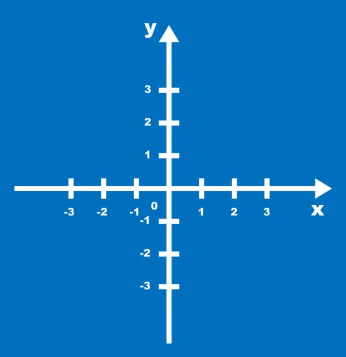
The Cartesian coordinate plane is a two-dimensional plane used to plot points using pairs of numbers, typically represented as (x, y).
How It Works
The plane is divided into four quadrants:
-
Quadrant I: (+, +) – both x and y are positive
-
Quadrant II: (-, +) – x is negative, y is positive
-
Quadrant III: (-, -) – both x and y are negative
-
Quadrant IV: (+, -) – x is positive, y is negative
The origin (0,0) is where the x-axis (horizontal) and y-axis (vertical) meet.
Plotting Points
-
To plot a point, locate its x-coordinate (horizontal value) and y-coordinate (vertical value).
-
Example: (3, 2) means 3 units to the right on the x-axis and 2 units up on the y-axis.
Why It’s Important
The Cartesian plane is foundational in mathematics, physics, engineering, and computer graphics. It allows us to describe geometric shapes, graph functions, and analyze data visually.
Applications
-
Graphing Functions: It’s used to graph equations like y = mx + b.
-
Data Visualization: The Cartesian plane helps in plotting data points for statistical analysis and predictions.