
Tessellation is the process of covering a surface with a pattern of flat shapes so that there are no gaps or overlaps. This concept is widely used in art, architecture, and mathematics.
Tessellating Shapes
Tessellations can use regular polygons (like squares, triangles, and hexagons) or irregular shapes. The key is that the shapes must fit together perfectly.
-
Regular Tessellations: Made from identical, repeating shapes. Common examples are squares, equilateral triangles, and regular hexagons.
-
Semi-Regular Tessellations: Combine two or more different regular polygons to fill the plane.
-
Irregular Tessellations: Use irregular shapes that fit together to form patterns without gaps or overlaps.
Famous artists like M.C. Escher used tessellations to create stunning visual illusions, showing the potential of geometric art.
Scale Drawings
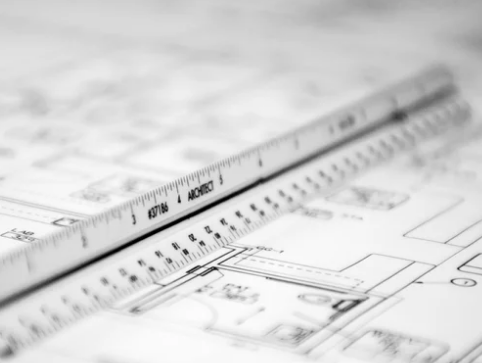
Scale drawings represent an object or design at a smaller or larger size while maintaining proportions. A scale is a ratio that shows the relationship between the dimensions of the drawing and the actual object.
-
Example: A scale drawing of a building might be 1:100, meaning 1 inch on the drawing represents 100 inches (or 8.33 feet) in reality.
Scale drawings are useful in fields like architecture, engineering, and map-making to create detailed designs on manageable paper sizes.